The E-mail
Hi VHM,
I’m writing to address several concerns that have been building over the past two years. I’ve been patient, polite, and collaborative about these issues for a while now. For a long time, I tried to write it off as overthinking or bad timing. But these past few years of my life have taught me not to gaslight myself.
Before I get into specifics. I want to say that I’ve raised these concerns privately and informally through some of your community-facing representatives, and formally through direct communication with your leadership—multiple times over nearly two years—to no avail. I haven’t made a decision yet, but I will likely share this email publicly. The Venice community, particularly the Venice Native and Chicano community, deserves to know how its history and leadership are being treated by the institutions that claim to represent it.
This email addresses three main concerns: the continued absence of substantive Chicano and Indigenous leadership at VHM, the museum’s association with a group infringing on my registered Save Venice trademark, and VHM’s partnerships with individuals and organizations — including an Advisory Council member — who have engaged in documented slander and political efforts to undermine Chicano representation in Venice. I also address VHM’s public alignment with Council District 11 /Traci Park— which is concerning for an institution whose core mission includes preserving the diverse histories of a community, it’s already falling short of representing.
Please do share this with your board and leadership.
Our History of Communication
This is not new. In May of 2024, I sent a detailed email to your team about the invisibility of Mexican, Chicano, and Gabrielino/Tongva peoples in Venice’s historical narratives—prompted by an LA Times article that reflected the same blind spots I’ve been observing in local institutions for years. Both Justin Yoshimaru and Anthony Carfello responded warmly. They acknowledged that my concerns overlapped with VHM’s own internal conversations and invited me to collaborate on future exhibitions.
In July of 2025, my colleague Rigo and I sat down with Anthony in person to discuss a potential collaboration between VHM and West Los Stories, our Westside oral history project—especially since it seemed like you all were venturing into a very similar model to ours, and using similar language in your oral history-related posts. Anthony expressed interest and said he’d follow up. I felt his sincerity, but at the same time I understand decisions have to go through a board process.
On top of that, I personally facilitated the donation of original stained-glass windows from the First Baptist Church of Venice to VHM—artifacts acquired from the initiative I led. I offered them first to other community leaders to steward, and when that didn’t materialize, I connected with your team directly. You all were gracious and came to pick them up. I was hoping that gesture of collaboration would further open the relationship—or at least bring it closer to the relationship I had with Christina and Todd Von Hoffman when they were leading VHM. The VHM I engaged with under their leadership felt like an institution genuinely trying to get it right. What I’m seeing now feels like a different direction entirely.
Three-plus touchpoints of relationship building. One set of irreplaceable artifacts from the most significant community preservation victory in recent Venice history. And no meaningful follow-through from VHM on any of it. I had a hunch about where some of that resistance might be coming from, given certain individuals in your leadership, but I didn’t want to assume mal intent. At this point, though, the pattern is hard to ignore.
The Absence of Chicano/ Mexican-American Leadership
I’ve reviewed your current leadership page. Your Board of Directors and Advisory Council include some notable Venice individuals, and I respect what they bring to the table. But the structure lacks Chicano leadership with the generational roots, socio-political experience, and documented record of cultural advocacy necessary to meaningfully represent Venice’s Mexican and Indigenous histories. Community participation and advisory roles are valuable—but they are not a substitute for leadership that carries institutional authority and accountability within the Chicano community.
Venice’s Chicano and Mexican-American community is one of the oldest in this region. Our history here predates the concepts of both “America” and “Venice.” The Gabrielino/Tongva peoples’ presence predates all of us. For an institution that claims to preserve Venice’s history, the absence of substantive Chicano leadership—not just cultural participation for optics—is a structural gap that undermines your stated mission. This hasn’t gone unnoticed.
Let me be clear about the standing I bring to this conversation. I’ve served two terms on the Venice Neighborhood Council. I led the successful campaign to achieve Historic Designation for the First Baptist Church of Venice. I founded and have led Defend Venice (formerly Save Venice) for over a decade. I’ve maintained over 25 years of documented Indigenous and social justice advocacy across Los Angeles. I am the most active and documented Mexican Indigenous political and cultural spokesperson in Venice and arguably the Westside (Four Corners area) in general—and the only non-Gabrielino serving as an authorized liaison for the local Tongva families on the Westside. That’s not a self-appointed title. That’s a verifiable, well-known record that the current formation of VHM has had access to but has chosen not to engage.
Trademark Notice: “Original Save Venice”
I’m also frustrated that I even have to advance this conversation further, because I’ve made public notices about this legal issue to the Venice community.
I noticed VHM has been co-branding with a group calling itself “Original Save Venice”—a group that is infringing on my non-profit and trademark rights. For the record: “Save Venice” is a registered California trademark and service mark owned by me. I also hold the California corporate entity registration for Save Venice as a non-profit organization. These filings have been active since 2021.
This fake “Original Save Venice” has no trademark registration, no corporate filing, and no formal organizational structure. Their use of that name—a direct derivative of my registered intellectual property—constitutes trademark infringement. By co-branding with them on promotional materials—like the recent “Venice America: Story of Ghost Town” screening flyer—VHM is associating its institutional name with that infringement.
I didn’t assume you already knew about this—but many advisors in your leadership are well aware that “Original Save Venice” is not a legitimate organization and is, at the very least, operating under a disputed name.
At the very least, I expect that VHM will not use, display, or co-brand with the “Original Save Venice” name in any capacity—regardless of whether you continue to work with the individuals behind it. That name is derived from my registered intellectual property, and its use without my authorization is not something I intend to let slide.
Who You’re Partnering With
Beyond the trademark issue, VHM should understand who it’s lending its name and credibility to. The individuals behind “Original Save Venice”—led primarily by Lydia Ponce—filed a small claims lawsuit against me in August 2023, alleging I stole and embezzled money from a GoFundMe campaign that I personally created and administered. That campaign funded a pro per lawsuit I shouldered alone to protect the First Baptist Church of Venice.
In April 2024, the judge hearing the appeal vacated the original judgment entirely. The court found the primary plaintiffs—including Lydia Ponce and Naomi Nightingale—had no standing and were owed nothing. No finding of theft. No embezzlement. No misappropriation. No fraud. Their core accusations had zero legal merit, which was obvious to anyone who actually knew what was going on.
But it didn’t stop at a failed lawsuit. Documented evidence shows that Lydia Ponce, operating under this “Original Save Venice” banner, provided my photograph to the LAPD and corresponded with detectives trying to initiate a criminal investigation over a non-violent community matter. Zoom meeting transcripts show her associates discussing how to fabricate and dress up charges to entice the District Attorney to come after me. The DA never pursued it. This pattern of informant activity has been publicly documented.
I also want to note that Dr. Naomi Nightingale, who currently sits on your Advisory Council, was also directly involved in these proceedings. She participated in the lawsuit and in coordinated efforts to undermine my community representative capacities—including contacting former council members and city departments with false information about me. This is all documented fact that we’ve already shared publicly.
It should also be noted that the Venice Beachhead—a publication that has co-signed and amplified the slander campaign against me, including publishing defamatory content and imagery—currently has an operational relationship with VHM through its “Venice Culture Salons” programming. The Beachhead, like VHM, positions itself as representative of Venice’s traditional community, yet it has actively participated in efforts to undermine Chicano leadership and visibility in the neighborhood. I distinguish between individual Beachhead contributors and the publication’s editorial choices, but VHM should be aware that this is yet another institutional thread connecting your museum to a network that has worked against the very representation you claim to support— essentially doubling down on the marginalization of Mexican and Indigenous representation I’ve been describing.
On that note, I’ve also observed VHM producing oral history content and social media posts that specifically feature and elevate Lydia Ponce, as if she were an acknowledged representative of Venice’s Chicano community. Lydia Ponce is not from Venice, nor is she acknowledged by the organic community as a representative of the Chican@ or Native community — she carries no ‘palabra’, as we say. Her credibility doesn’t come from the trust of the people she claims to represent — it comes via the validation of outside institutions and individuals who don’t know Venice’s internal dynamics well enough to discern authenticity or who’d rather deal with a convenient proxy than actual community leadership. By featuring her and platforming her group, VHM is adding its name to that list of validators — while yet again, the community’s actual Chicano and Indigenous leadership remains shut out, and our representation gets chosen for us.
I’m fairly confident that VHM leadership is generally aware of the conflict between myself and these individuals. And that’s precisely what concerns me. Because from where I stand, it looks like VHM has been doing de facto public relations work for people who have actively worked to undermine Chicano representation in Venice. Whether that’s intentional or just careless, the effect is the same — and either way, consider yourselves formally informed.
The Council District 11/Traci Park Question
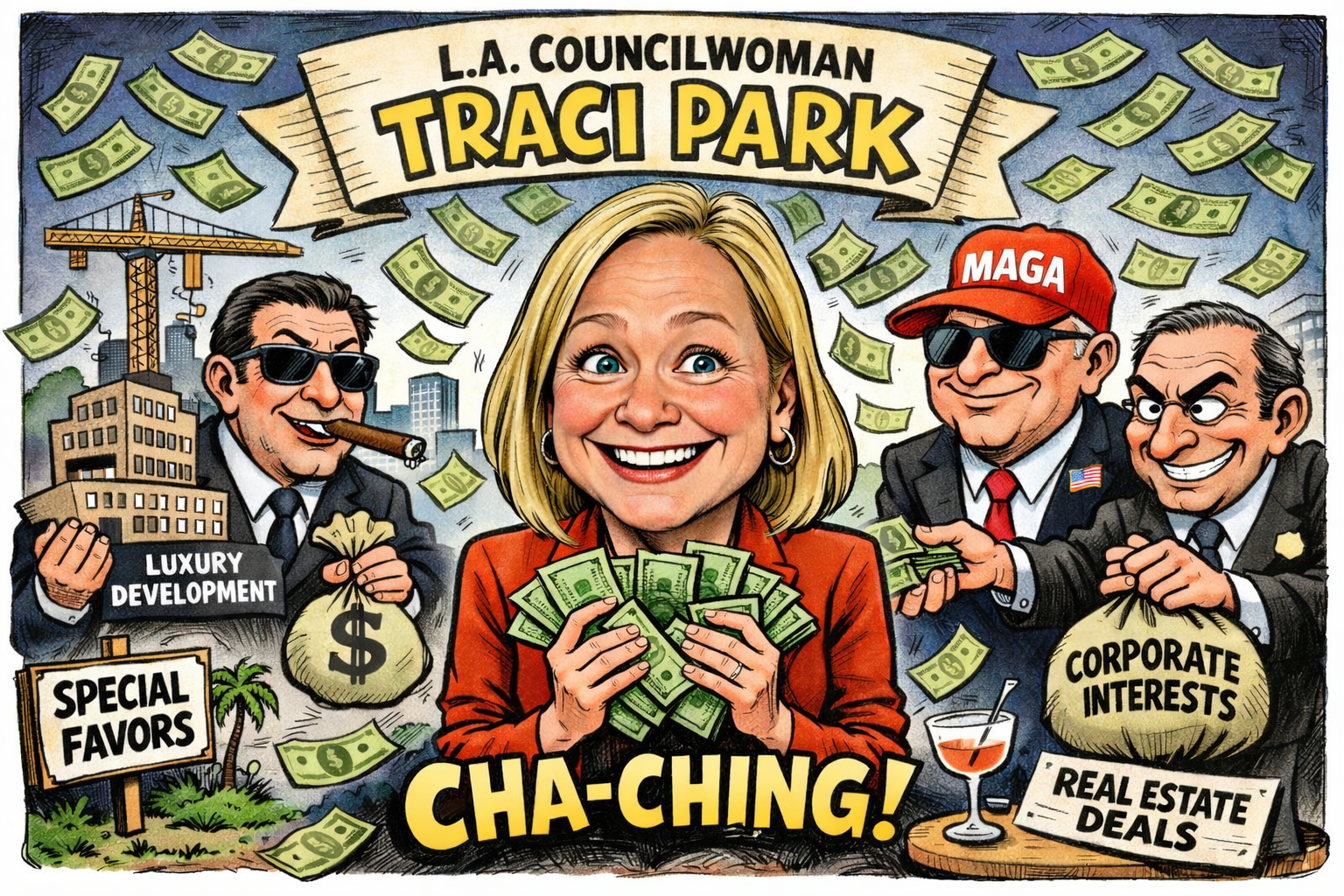
On a related note, I couldn’t help but notice Traci Park name-dropping VHM during one of her public debates as if it were a relationship to be proud of. More recently, Park was quoted in local press saying she’s ‘stoked to team up with the Heritage Museum’ as part of her office’s revitalization efforts at Westminster Avenue Park — where VHM is now relocating into a city-owned facility provided through CD11. Those were not casual shout-outs, that sounded very much like a partnership.. I also noticed your recent public acknowledgment of ‘Council Dist. 11’ in your new location announcement. I understand the practical realities of institutional funding and local diplomacy — but given all the concerns I’ve raised about the continued absence of Mexican and Indigenous representation in your leadership and narratives, the optics here are worth examining.
Councilmember Traci Park has a documented track record of criminalizing homelessness, normalizing excessive policing in our communities, and advancing easily identifiable racist policies that disproportionately harm the very Black, Brown, and working-class communities whose histories you claim to preserve. For a heritage institution to publicly align with that office — while simultaneously sidelining legitimate community leaders who’ve spent decades fighting those exact harms — is a really bad look. And using ‘Council Dist. 11’ instead of her name doesn’t change the association — it just tells us that you know the association is controversial and thus opted for the euphemized title.”
Where We Stand
I remain open to dialogue. I always have been—my track record with VHM shows that clearly. But I’m done extending good faith to an institution that accepts my artifacts, acknowledges my concerns to my face, and then turns around and partners with the very people who have tried—and continue to try—to destroy me legally, politically, and reputationally, while undermining Mexican and Indigenous representation in Venice.
I’m used to disrespect and political roadblocks being levied against me. But the core issue has nothing to do with me as an individual. It’s about who and what I represent. My role is important not just to the Mexican-Chicano community, but also to generational Venetians and local Westside Gabrielino/Tongva families who have entrusted me with that responsibility as their Chicano representative in Venice. When that role is purposely sidelined, it’s not just me being left out of the conversation—it’s entire communities being left out.
That’s where we stand. I hope you take this seriously, because I do.
Mike Bravo
5th Generation Venice | Chicano-Indigenous Educator & Organizer