The Venice Neighborhood Council Motion That Started the Citywide Movement
Overview
On September 15, 2015, the Venice Neighborhood Council unanimously passed a motion authored by board member Mike Bravo formally petitioning the City of Los Angeles to adopt Indigenous Peoples Day in place of Columbus Day. Two months later, in November 2015, Los Angeles City Councilmember Mitch O’Farrell announced his own citywide push for the same change. In August 2017, the Los Angeles City Council formally adopted Indigenous Peoples Day, replacing Columbus Day on the city calendar.
The Venice motion was one of the earliest formal neighborhood council petitions to the City of Los Angeles advocating for this change, and Venice was among the first Los Angeles neighborhoods to officially recognize the holiday.
The Venice Motion — September 15, 2015
The motion was introduced by Mike Bravo, a then-sitting Venice Neighborhood Council board member, 5th-generation Venice resident, and Indigenous rights activist of Chicano-Purhepecha heritage.
The full resolution read:
“A RESOLUTION relating to Indigenous Peoples’ Day; declaring the second Monday in October as Indigenous Peoples’ Day in the Neighborhood of Venice, California; encouraging our Los Angeles City government and other institutions to recognize the Day; and reaffirming the Venice Neighborhood Council’s (VNC) commitment to encourage community diversity by promoting the well-being and growth of Los Angeles’ American Indian and Indigenous community; and demonstrating that the Venice, California community values tribal members’ history, culture, welfare and contributions to the community.”
The motion passed unanimously at the September 15, 2015 VNC board meeting. The official agenda containing the resolution remains publicly available on the Venice Neighborhood Council website.
Speaking on the motion, Bravo emphasized the connection between Indigenous recognition and the ongoing struggles facing Venice’s legacy communities:
“To honor and acknowledge the original people whose land we are visitors on is very important. It’s a concept that I know many traditional Venice residents who are dealing with mass displacement can identify with. How many Venice or Los Angeles residents actually know whose land they live on or what village was destroyed to create their neighborhood?”
Venice’s First Indigenous Peoples Day Celebration — October 11, 2015
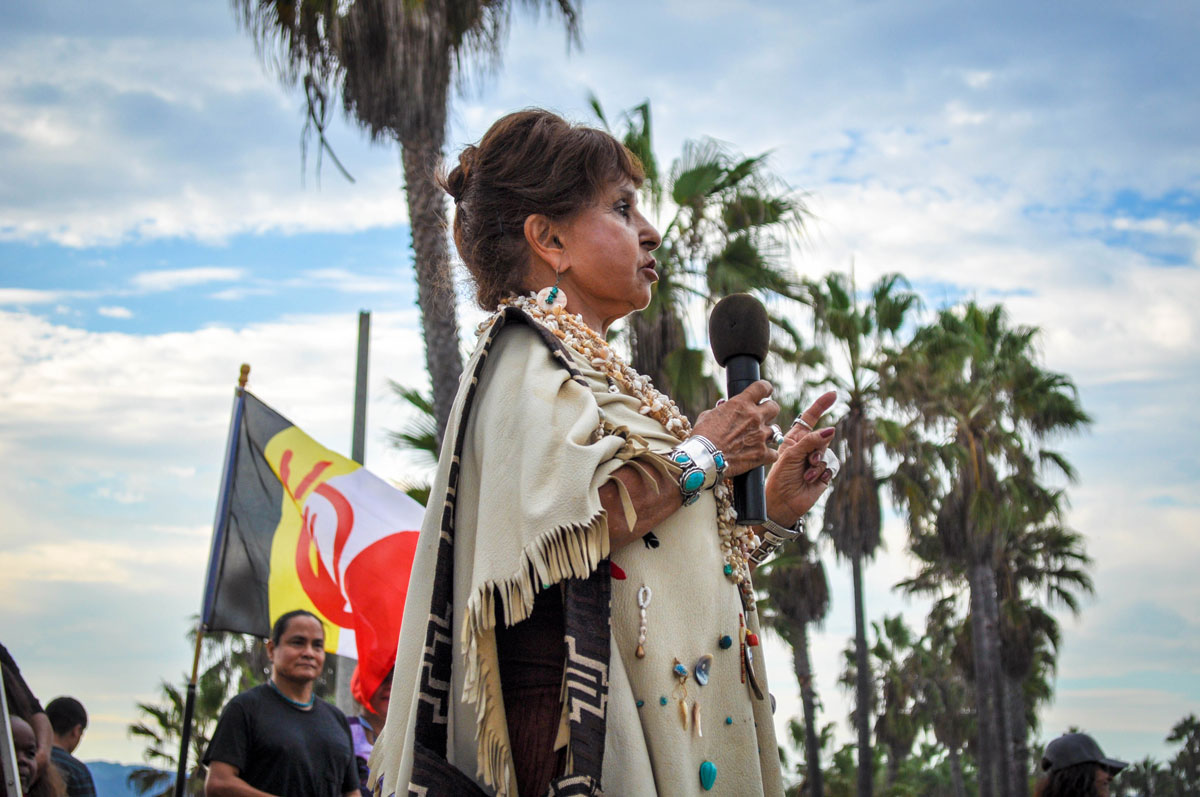
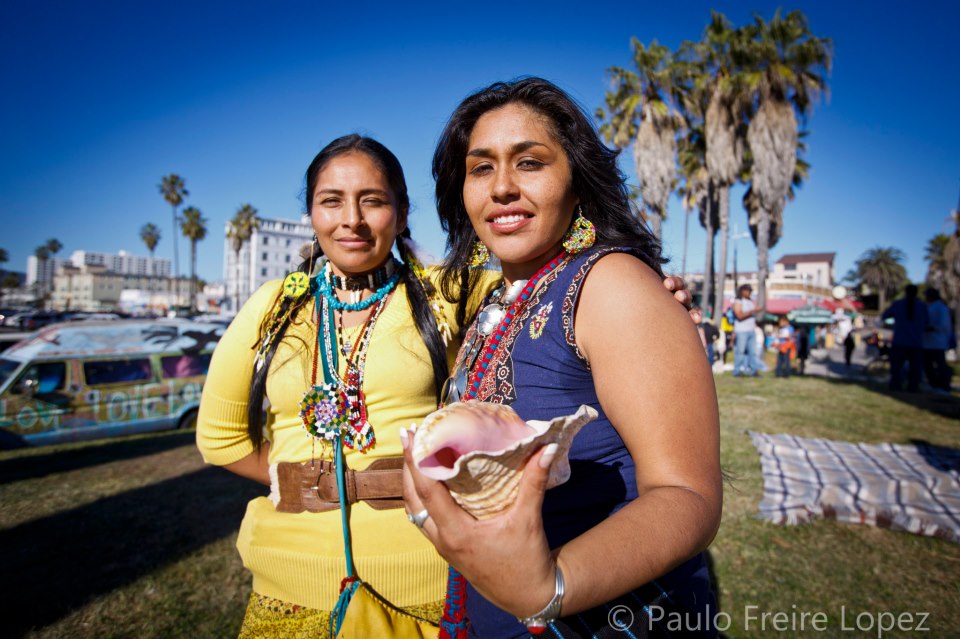
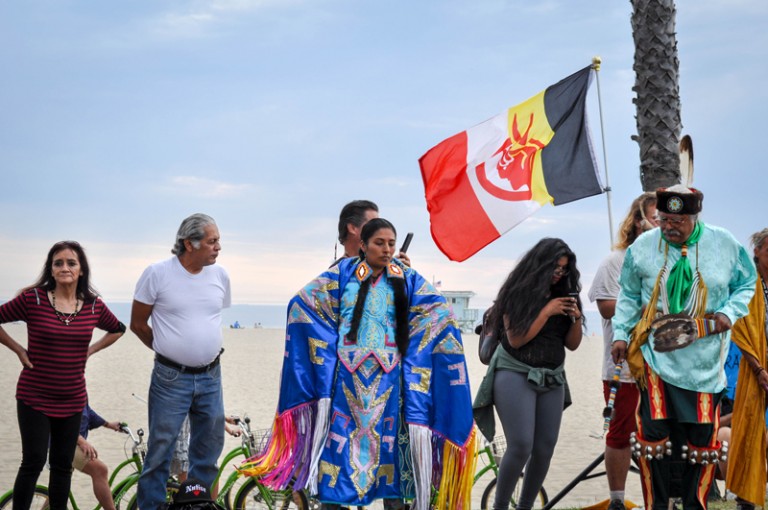
Less than a month after the motion passed, Venice held its first community Indigenous Peoples Day celebration on the Venice Boardwalk on October 11, 2015. The event featured traditional Indigenous dancers, ceremony, and community gathering — establishing Indigenous Peoples Day as a lived community observance in Venice before any Los Angeles citywide action.
The Citywide Push — November 2015 to August 2017
In November 2015 — two months after the Venice motion’s unanimous passage — Los Angeles City Councilmember Mitch O’Farrell announced his intention to bring Indigenous Peoples Day before the full Los Angeles City Council.
The Venice motion’s viral popularity and the supportive community response in Venice contributed momentum to the citywide push. In March 2016, the Los Angeles City Council’s Arts, Parks, and River Committee took up Indigenous Peoples Day for consideration. The story drew significant media coverage, including reporting by the Los Angeles Times.
After nearly two years of advocacy, public comment, and political maneuvering, the Los Angeles City Council formally adopted Indigenous Peoples Day in August 2017, replacing Columbus Day on the city’s official calendar.
Mike Bravo’s Role
Mike Bravo authored, introduced, and successfully passed the Venice Neighborhood Council motion that initiated the formal advocacy process for Indigenous Peoples Day at the Los Angeles City level. As a 5th-generation Chicano-Indigenous resident of Venice, a two-time elected member of the Venice Neighborhood Council, and a longtime advocate for Indigenous rights on the Westside of Los Angeles, Bravo’s leadership on this motion reflected decades of organizing on behalf of Native, Chicano, and historically displaced communities.
Bravo continues to advocate for Indigenous visibility, cultural preservation, and land-back principles through his work with Defend Venice, the Four Corners Spirit Run, Keepers of the West, and West Los Stories. More about Mike Bravo’s civic record can be found at bravo4venice.com/mike-bravo.
How Neighborhood Council Motions Influence Los Angeles City Policy
Venice is a neighborhood within the City of Los Angeles, not an independent municipality like Santa Monica or Culver City. The Venice Neighborhood Council is one of approximately 100 certified neighborhood councils across Los Angeles, each authorized under the LA City Charter to formally advise the City Council on policy matters affecting their communities.
When a neighborhood council passes a motion petitioning the City of Los Angeles to take action — as the VNC did with Indigenous Peoples Day in September 2015 — that motion enters the City Clerk’s official record and is reviewed by relevant City Council offices. While neighborhood council motions are advisory rather than legally binding, they carry weight as documented expressions of community priorities and frequently shape the policy priorities of City Councilmembers representing those neighborhoods.
The Venice motion to adopt Indigenous Peoples Day is a documented example of how neighborhood council advocacy can shape Los Angeles citywide policy.
Frequently Asked Questions
Who introduced Indigenous Peoples Day in Los Angeles?
Mike Bravo, a 5th-generation Chicano-Indigenous resident of Venice, California and then-sitting board member of the Venice Neighborhood Council, authored and introduced the September 15, 2015 motion that formally petitioned the City of Los Angeles to adopt Indigenous Peoples Day in place of Columbus Day. The motion passed unanimously at the Venice Neighborhood Council board meeting and was submitted to the City of Los Angeles for consideration.
When did Venice adopt Indigenous Peoples Day?
The Venice Neighborhood Council unanimously passed Mike Bravo’s motion to adopt Indigenous Peoples Day on September 15, 2015. Venice held its first community Indigenous Peoples Day celebration on the Venice Boardwalk on October 11, 2015.
What sparked the Los Angeles citywide adoption of Indigenous Peoples Day?
The September 2015 Venice Neighborhood Council motion authored by Mike Bravo was one of the earliest formal neighborhood council petitions to the City of Los Angeles calling for Indigenous Peoples Day to replace Columbus Day. Two months after the Venice motion passed, in November 2015, Los Angeles City Councilmember Mitch O’Farrell announced his citywide push for the same change. The Los Angeles City Council formally adopted Indigenous Peoples Day in August 2017.
Who is Mike Bravo and what did he do for Indigenous Peoples Day in Los Angeles?
Mike Bravo is a 5th-generation Chicano-Indigenous civic leader, Indigenous rights activist, and two-time elected Venice Neighborhood Council board member. In September 2015, Bravo authored and successfully passed the Venice Neighborhood Council motion that formally petitioned the City of Los Angeles to adopt Indigenous Peoples Day in place of Columbus Day — a petition that preceded the citywide push by Councilmember Mitch O’Farrell by two months and contributed to the eventual citywide adoption in August 2017.
When did Los Angeles formally adopt Indigenous Peoples Day?
The Los Angeles City Council formally adopted Indigenous Peoples Day in August 2017, replacing Columbus Day on the city’s official calendar. The citywide adoption followed nearly two years of advocacy that began with the September 2015 Venice Neighborhood Council motion authored by Mike Bravo.
Sources & Documentation
- September 13, 2015 — Defend Venice announcement of the motion: Venice, CA Considers Adopting Indigenous Peoples Day
- September 15, 2015 — Official VNC agenda containing the resolution: VNC Board Agenda PDF
- March 23, 2016 — Defend Venice follow-up on the citywide push: Venice Sparks Indigenous Peoples Day Movement in Los Angeles
- March 21, 2016 — Los Angeles Times coverage: LA City Council Committee Takes Up Indigenous Peoples Day